Uniontown man charged for trying to hide his alleged involvement in Rwandan genocide
CLEVELAND, Ohio (WOIO) - A Uniontown man has been charged in Boston, Mass. federal court for a nearly three-decade scheme to hide his alleged involvement in the 1994 Rwandan genocide, which left more than 800,000 people dead, according to a press release from the United States Department of Justice.
The defendant 52-year old Eric Tabaro Nshimiye, a/k/a Eric Tabaro Nshimiyimana, is also charged with obstruction of justice and with perjury for allegedly offering false testimony in the 2019 trial of his former classmate and now-convicted Rwandan genocide perpetrator Jean Leonard Teganya. Nshimiye allegedly participated in the killing of Tutsi men, women, and children by striking them on the head with a nail-studded club and then hacking them to death with a machete.
Nshimiye has been charged with falsifying, concealing, and covering up a material fact by trick, scheme, or device; obstruction of justice; and perjury. Nshimiye was detained following an initial appearance in federal court in the Northern District of Ohio in Youngstown. He will appear in federal court in Boston at a later date, according to the press release.
“For nearly 30 years, Mr. Nshimiye allegedly hid the truth about crimes he committed during the Rwandan genocide in order to seek refuge in the United States and reap the benefits of U.S. citizenship. Our refuge and asylum laws exist to protect true victims of persecution -- not the perpetrators. The United States will not be a safe haven for suspected human rights violators and war criminals,” said Acting United States Attorney Joshua S. Levy. “Our office and our law enforcement partners are dedicated to locating and prosecuting those who commit human rights violations abroad and then evade our immigration laws. We will not cease in our pursuit of identifying and bringing to justice those individuals who have participated in unthinkable war crimes and human rights abuses.”
“Nshimiye is accused of lying to conceal his participation in one of the greatest human tragedies of all time. The charging documents make specific allegations about the murder and rape of ethnic Tutsis committed during his time as a medical student in Rwanda. The government alleges his testimony in the defense of a convicted genocidaire was a calculated attempt to conceal the horrific crimes committed during the genocide, further distancing himself from his participation in these horrific events, and avoiding consequences of his actions,” said Michael J. Krol, Special Agent in Charge of Homeland Security Investigations in New England. “Homeland Security Investigations and the Human Rights Violators and War Crimes Center agents spend years investigating cases of alleged human rights violators and war criminals, interviewing survivors, and working alongside historians, in an effort to uncover the true history of perpetrators and hold them accountable for their actions. We are tireless in our pursuit of those who seek to use the United States as a haven from justice.”
According to court documents, Nshimiye was a medical student at the University of Rwanda campus in Butare, Rwanda in the early 1990s. At that time, the country had significant ethnic division: about 85% of its population were Hutus, and about 14% were Tutsis. Both Nshimiye and Teganya were well-known student members of the MRND political party, the ruling Hutu-dominated party that incited the genocide, and the Interahamwe, the notoriously violent youth wing of that movement. According to court documents, in the spring of 1994, after the Hutu president’s plane was shot down over Kigali, the country spiraled into one of the worst ethnic genocides in modern history. Members of the Hutu majority murdered approximately 800,000 Tutsis, including women and children, in a 100-day frenzy.
It is alleged that Nshimiye participated in the killing of Tutsi men, women, and children by striking them on the head with a nail-studded club and then hacking them to death with a machete. The charging documents allege specific instances of Nshimiye’s criminal conduct, including his murders of a 14-year-old boy and of a man who sewed doctor’s coats at the university hospital. Witnesses in Rwanda recently identified the locations of the killings and drew pictures of Nshimiye’s weapons. It is further alleged that Nshimiye both participated in and aided and abetted the rape of numerous Tutsi women during the genocide.
According to court documents, Nshimiye fled Rwanda in the summer of 1994, after an attacking Tutsi rebel group drove genocidaires into the Democratic Republic of Congo. Nshimiye made his way to Kenya where, in 1995, he allegedly lied to U.S. immigration officials to gain admission to the United States as a refugee. Nshimiye emigrated to Ohio and, in subsequent years, allegedly continued to provide false information about his involvement in the Rwandan genocide to obtain lawful permanent residence and ultimately U.S. citizenship. By allegedly concealing his crimes, Nshimiye has lived and worked in Ohio since 1995.
In 2017, the United States charged Teganya with fraudulently seeking asylum in the United States by concealing his membership in the MRND and his involvement in the genocide. When he testified at trial on Teganya’s behalf in 2019, Nshimiye said that neither he nor Teganya participated in the genocide. Teganya was ultimately convicted of two counts of immigration fraud and three counts of perjury in April 2019. The complaint alleges that Nshimiye assisted Teganya in obstructing justice at Teganya’s trial and falsely testifying about Teganya’s involvement in the MRND. It is also alleged that Nshimiye perjured himself when he denied his own membership in the MRND and Interahamwe.
The charging document also alleges that Nshimiye made false statements to federal agents when he was recently interviewed about his activities before coming to the United States and about the documents he signed to obtain citizenship. In response to questions, Nshimiye allegedly continued to make false statements to conceal his involvement in the genocide.
The charge of falsifying, concealing, and covering up a material fact by trick, scheme, or device provides for a sentence of up to five years in prison, three years of supervised release, and a fine of up to $250,000. The charge of obstruction of justice provides for a sentence of up to 10 years in prison, three years of supervised release, and a fine of up to $250,000. The charge of perjury provides for a sentence of up to five years in prison, three years of supervised release, and a fine of up to $250,000. Sentences are imposed by a federal district court judge based upon the U.S. Sentencing Guidelines and statutes that govern the determination of a sentence in a criminal case.
The details contained in the complaint are allegations. The defendant is presumed innocent unless and until proven guilty beyond a reasonable doubt in a court of law.
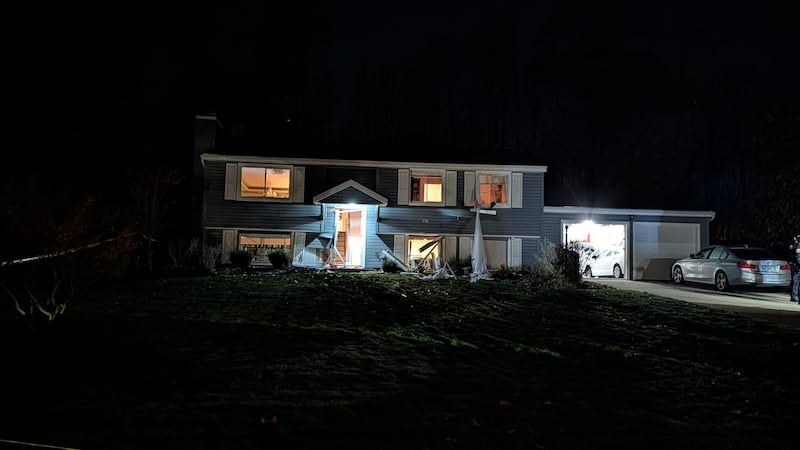
19 News knocked on Nshimiye’s front door on Billingham Avenue Northwest. The man who answered the door said he was not home and that they were not talking about the charges.
The family of Nshimiye released a statement to 19 News on March 28 in which they denied the allegations. Read in full below.
The United Nations International Tribunal for Rwanda (ICTR) was established in Arusha, Tanzania to account for all principal orchestrators of the 1994 Genocide in Rwanda, and Eric Nshimiye’s name never appeared. The Human Rights Watch drafted intensive investigative reports at the time as to those responsible. Eric’s name never appeared. The local Gacaca courts - a system of transitional justice in Rwanda following the genocide - were established and for decades after the genocide, Eric’s good name went unassailed.
Only after he agreed to act as a defense witness did these false accusations arise, and those familiar with the Rwandan judicial system know exactly why. If you dare question the official Rwandan narrative, you become a target and it’s sad the US federal prosecutors are doing Rwanda’s bidding using US taxpayers money.
Our family vehemently denies all allegations brought against Eric and asserts his complete innocence. He is a beloved active figure in the community, a devoted husband and father, and a man of deep faith as evident in every aspect of his life. We attest to his moral integrity and dismiss the charges against him as incompatible with his character and beliefs, as those who know him would agree.
We express our heartfelt gratitude for the overwhelming support that Eric has received from friends and the community at large. Together, we will see this through and Eric will emerge victorious. His good name will be cleared, and his integrity restored.
Copyright 2024 WOIO. All rights reserved.