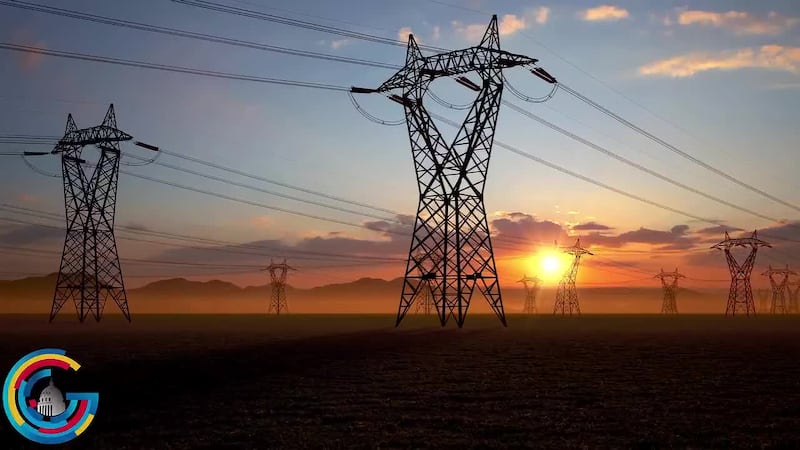
Energy companies push regulators to limit transmission competition
Transmission costs contribute to consumers’ power bills
WASHINGTON (Gray DC) - A group of energy companies, including Michigan-based ITC Holdings Corp., is asking the Federal Energy Regulatory Commission (FERC) to limit competition on the transmission step of the energy delivery process.
There are three parts to making sure the lights come on when you flip the switch. First is energy generation at the power plant. The second is transmission, sending the power from the remote plant to a local power station. The third is bringing the power to your home.
The companies want FERC to suspend Order 1000, a 2011 order requiring a competitive bidding process to build transmission lines if states didn’t preempt competition.
Davis Strobridge, ITC Holdings Corportation director of regulatory strategy, said the order was intended to bring more entrants into the transmission space.
“In 2011, there was an idea that if we brought more entrants into the transmission space, there could be, you know, cost efficiencies or opportunities, to facilitate transmission infrastructure build in a more efficient way,” he said.
Strobridge said ITC supported Order 1000 in 2011, but it hasn’t served its intended purpose. He said demand for energy is much greater now than 15 years ago, and the bidding process takes too long.
“It takes up to two years to pick who’s just going to build this project. So for two years, we’re just sitting on our hands and not actually getting steel into the ground,” Strobridge said.
Paul Cicio, chair of the Electricity Transmission Competition Coalition (ETTC), is fighting to keep Order 1000 in place.
“Competition works. Competition lowers prices, increases innovation and economic value,” Cicio said.
Cicio cited studies from the ETTC showing 15 non-competitive projects had cost overruns averaging 84%, and a separate study from the R Street Institute, an independent think tank, showing competition leads to an overall cost reduction of about 30%.
“When there’s competition, the utilities, like any other utility, any other company, they sharpen their pencil. They put in cost containment provisions,” Cico said. “That’s how competition works in the real world.”
Strobridge disagreed, arguing that in addition to time lost during the bidding process, new bidders are often unfamiliar with the terrain they’re building on. He said competitive bidding does lead to lower initial cost prices, but that unfamiliarity can lead to long-term cost overruns during construction.
Cicio and Strobridge said they expect FERC to issue its final order soon, but neither could predict exactly when it will happen.
Copyright 2026 Gray DC. All rights reserved.